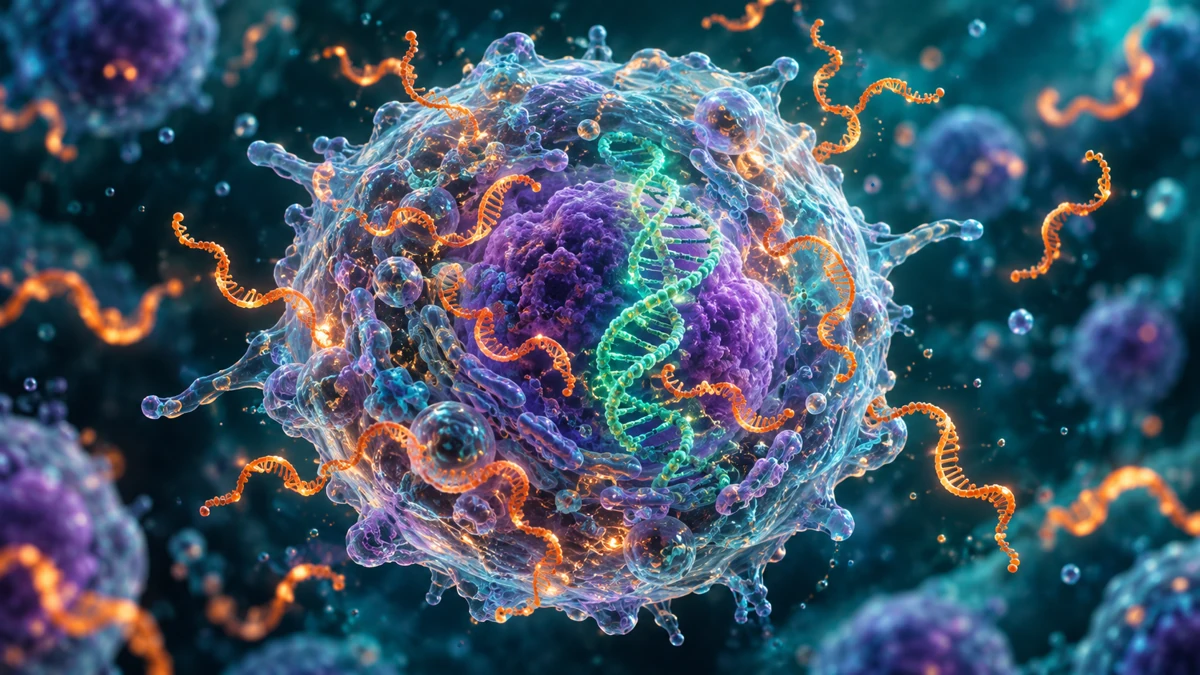
cfDNA
Cell-free DNA consists of DNA fragments outside intact cells. Tumor-associated alterations in those fragments can provide genomic information.
- Sequence alterations
- Copy number and chromosomal findings
- Genomic context for interpretation
cfDNA + cfRNA Liquid Biopsy for CNS Disease
Beyond Blood. Closer to CNS Disease.
Profile molecular signals in cerebrospinal fluid for primary brain tumors, CNS metastases and hematologic malignancies involving the CNS.

The source of a liquid biopsy matters. CSF can provide a different view of CNS disease from a blood sample. Evaluating both cfDNA and cfRNA adds complementary molecular information from that compartment.
Cell-free DNA consists of DNA fragments outside intact cells. Tumor-associated alterations in those fragments can provide genomic information.
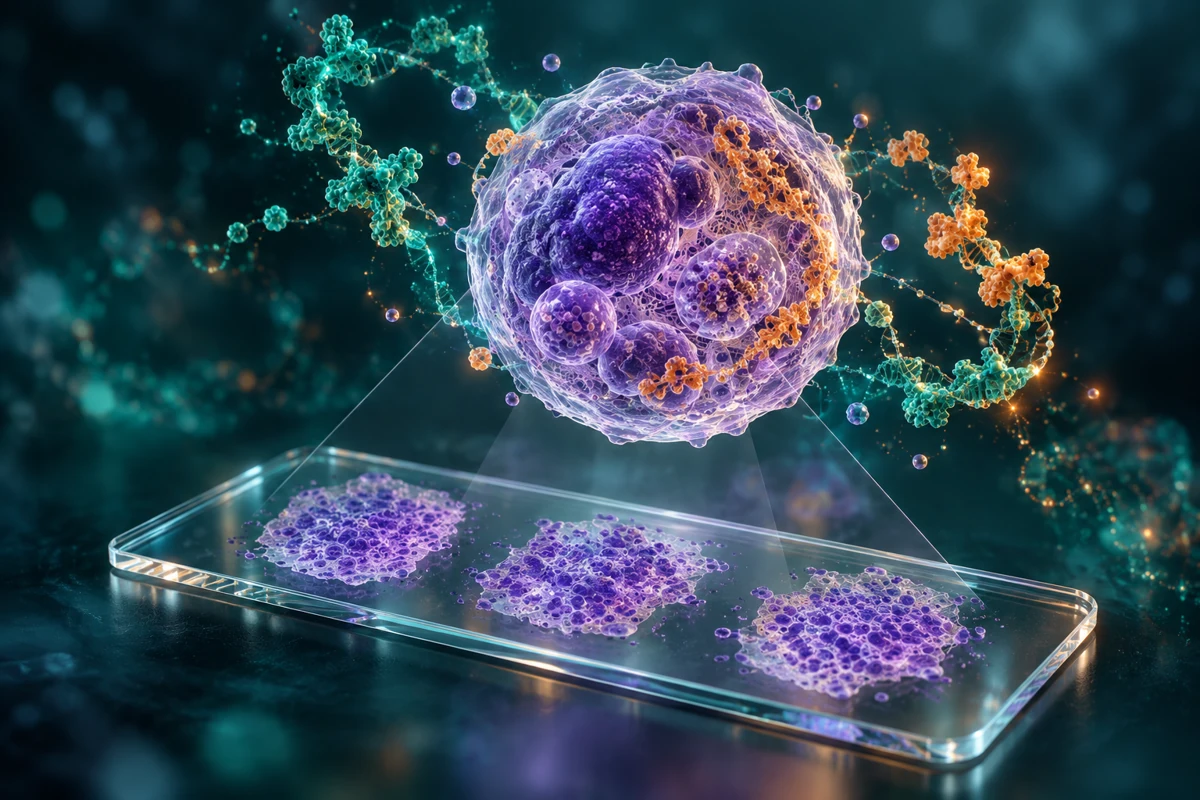
Cell-free RNA adds information about gene messages. It can contribute evidence about expressed fusions, gene expression and abnormal splicing.
RNA abundance and molecular shedding vary. The value of the combined profile comes from evaluating complementary findings together—not from assuming every sample contains every signal.
Review molecular evidence in the context of diagnosis, treatment history and the complete clinical workup.
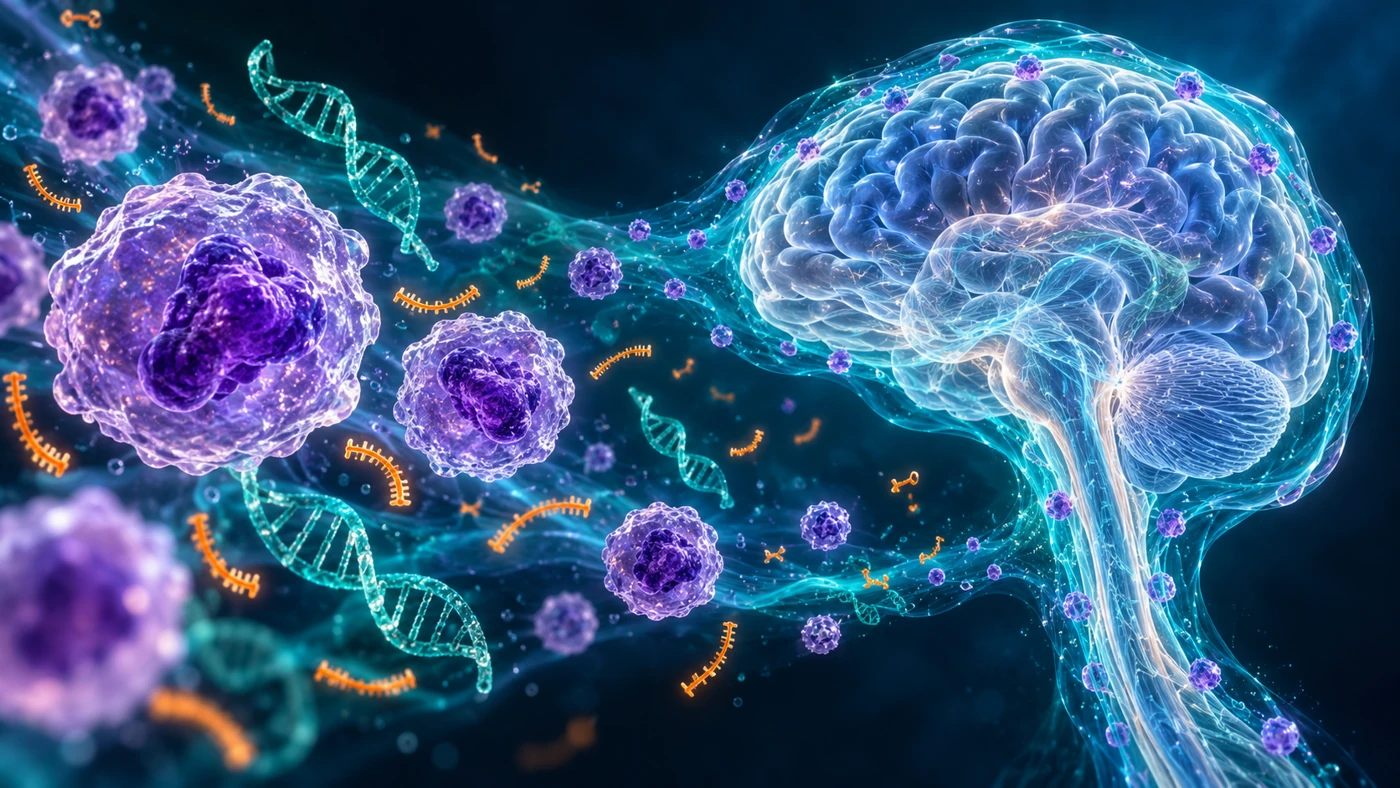
Evaluate molecular signals from the compartment surrounding the brain and spinal cord.
Review genomic and RNA findings, with lymphoid clonality information where relevant.
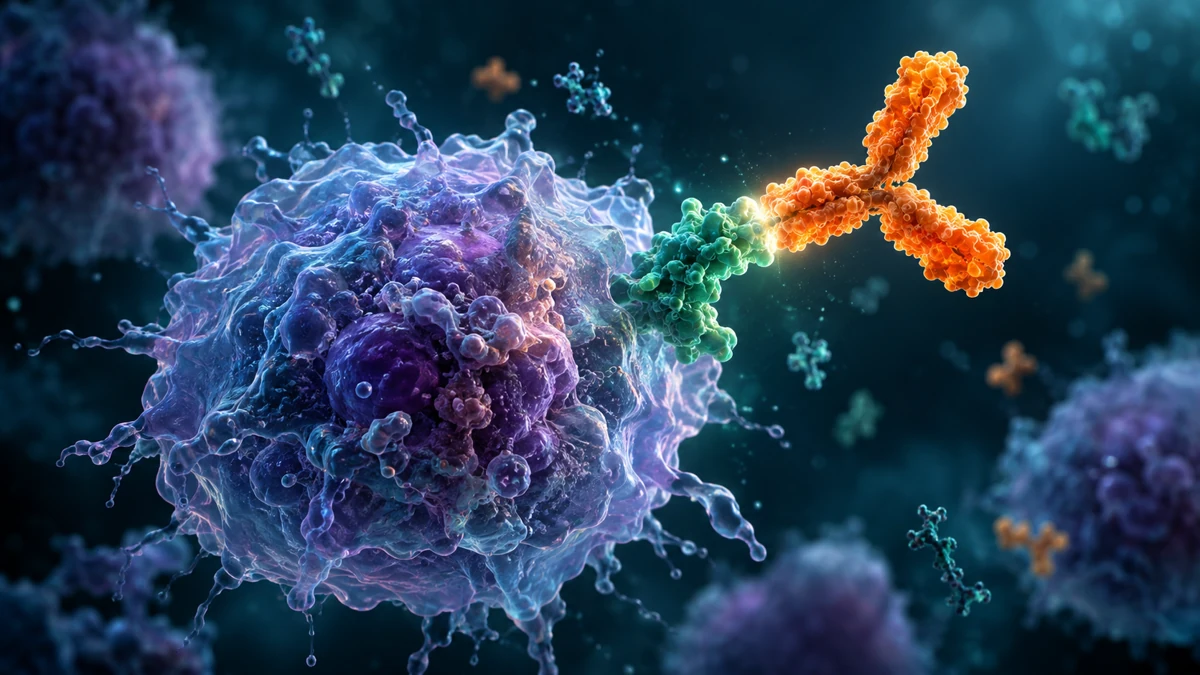
Bring molecular findings into discussions of therapy, clinical trials and follow-up assessment.
Conceptual scientific illustrations.
CSF samples the central nervous system compartment. For CNS-confined disease, it may provide tumor-derived information that is difficult to detect in plasma. The amount of material available varies between patients.
CSF molecular profiling is considered alongside imaging, cytology, flow cytometry, tissue pathology and clinical findings. No single test resolves every diagnostic question.
Mutation and RNA findings can be interpreted with B- and T-cell clonality in appropriate CNS lymphoma or leukemia evaluations. A result must be assessed in the complete diagnostic context.
GTC offers MGMT promoter methylation analysis for brain-tumor evaluations when tumor DNA is detected. Discuss suitability and ordering with the laboratory.
The clinical question may call for a different sampling compartment.
Evaluate tumor-associated cfDNA and cfRNA from the CNS compartment.
Integrate the findings with imaging, pathology and the patient’s history.

Select a scene to explore the story. These are conceptual visuals, not patient results.
CSF can add a CNS-focused molecular perspective. It complements the other studies chosen by the clinical team; the choice to collect CSF depends on the patient’s circumstances.
Cerebrospinal fluid, or CSF, surrounds the brain and spinal cord. Your doctor may recommend testing it to learn more about a cancer affecting the central nervous system.
A trained clinical team collects CSF, usually through a lumbar puncture or an existing reservoir. Your doctor will explain the procedure and whether it is appropriate.
The test may inform treatment discussions, but a treatment match is not guaranteed. Your doctor will explain what the findings mean for you.
A negative result does not rule out cancer. Your care team will consider other test results and whether further evaluation is needed.
Testing is ordered through your treating clinician. Discuss suitability and collection with your care team.
A clear path from selecting the test to submitting the specimen.
Choose Liquid Trace on CSF and complete the requisition.
The clinical team selects and collects an appropriate specimen.
Include relevant clinical information and follow GTC’s shipping instructions.
GTC lists 7–10 mL as optimal and 5 mL as the minimum for CSF on its Liquid Trace collection pages. Use a clear collection tube without anticoagulant and arrange prompt overnight shipment. Confirm current instructions before collection.
Get collection instructions and help choosing the right test.
Liquid Trace evaluates cfDNA and cfRNA. RNA contributes gene-message information that complements the genomic findings from DNA.
No single test answers every clinical question. The treating team may use liquid biopsy with tissue pathology, imaging and other studies.
Contact GTC to confirm the current turnaround time for the selected assay, specimen and clinical circumstances.
Use GTC’s ordering resources or call 866-484-8870. Patients should work with their treating clinician.
Discuss the right specimen and test for the clinical question.